
The Second City Shift: Europe's Most Talked About Cities 2026
11.03.26
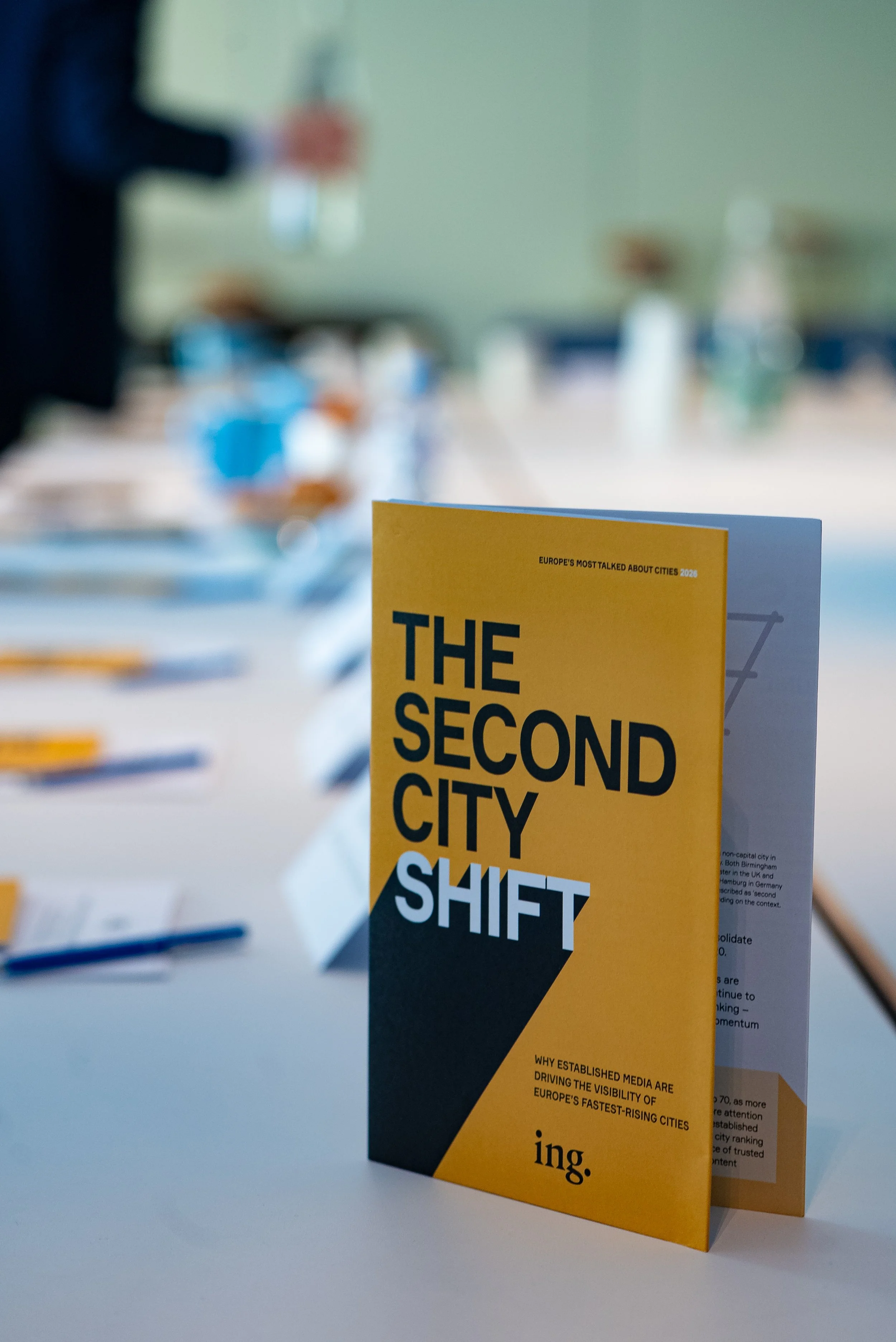
“Why established media are driving the visibility of Europe's fastest-rising cities”
Europe’s Most Talked About Cities 2026
Europe’s second cities are gaining ground faster than many national capitals, fuelled by changes in how people discover, compare and validate places online. The built-in preferences of generative AI tools favour sources they have been trained to understand as authorities. The irony for news organisations facing the challenge of crashing numbers of page views – known as “Google zero” – is that their content is seen as among the most trustworthy by the AI agents that are eroding their audience.
Each year, ING analyses the digital visibility of European cities across news, social media and online platforms to rank Europe’s Most Talked About Cities. Now in its eighth year, this year we have been struck by the dynamism slightly lower down the ranking. Europe’s second cities are demonstrating big shifts in how places are talked about and discovered. The 10 fastest-rising cities in 2026 share a clear distinguishing trait: they appear more often in authoritative, high-trust media, such as the online platforms of the FT, Die Zeit and Il Sole 24 Ore. Many of them are also ‘second cities’: cities that are recognisable, but still discoverable.
Download the report
🟡
Download the report 🟡
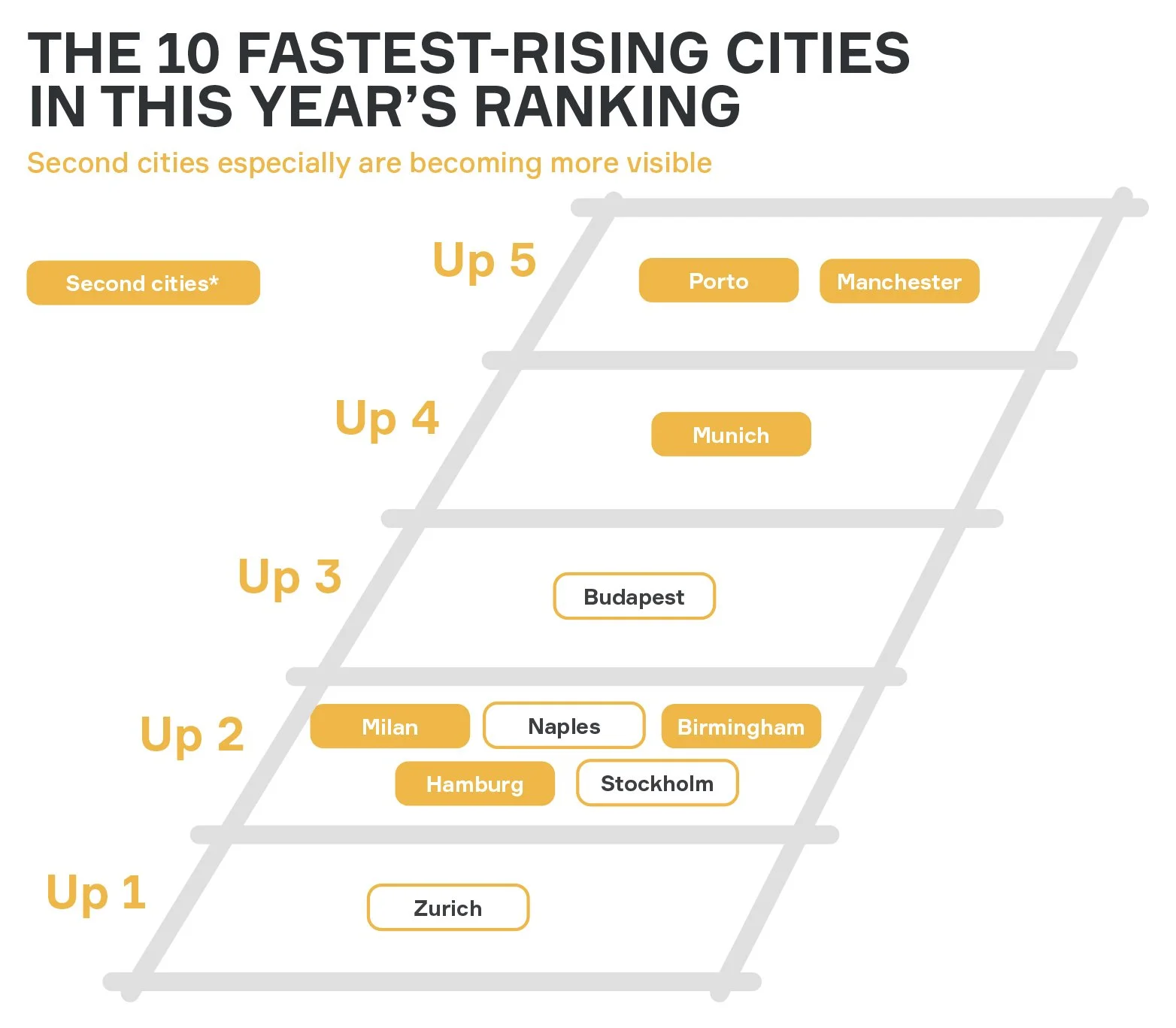
The fastest-rising cities of 2026
This year’s biggest climbers demonstrate the shifting momentum in European visibility:
Manchester ▲5
Porto ▲5
Munich ▲4
Budapest ▲3
Birmingham ▲2
Milan ▲2
Naples ▲2
Hamburg ▲2
Stockholm ▲2
Zurich ▲1
Trusted media is powering the rise of second cities
This year the ranking includes 70 cities, reflecting a more competitive attention landscape. It uncovers a clear pattern:
Nine of the ten fastest-rising cities improved their share of coverage in authoritative, high trust media.
More than half of them are ‘second cities’. Cities such as Milan, Manchester, Munich, Hamburg, Naples and Porto are no longer simply alternatives to their capitals; they are becoming reference points for broader conversations about economic transition, culture, lifestyle, housing and growth.

How AI is rewriting the rules of city visibility
As routes for discovery multiply, AI is becoming a core filter through which people understand cities.
Because generative models rely heavily on established, trustworthy media, trusted outlets act as anchors, shaping how AI summarises cities and how audiences interpret them.
People are discovering and comparing cities through AI‑filtered snapshots, making credible visibility more important than ever. To influence these perceptions, cities must show up in authoritative sources and maintain a consistent narrative across all channels, ensuring that AI can easily summarise them and amplify a clear and coherent story.

What does this mean for your city?
The report outlines six imperatives for city leaders, investment agencies and place brand specialists:
Prioritise authoritative media alongside digital reach
Position your city as a case study of wider trends
Design communications that are legible to AI
Balance social engagement with trusted media validation
Align stakeholders around one coherent story
Measure success by influence, not exposure
With AI changing how people compare places, cities that pair credibility and consistency will be best placed to convert attention into long-term momentum.
To get in touch and discuss what this means for your own communications, please contact Lucie Murray, Head of Cities at ING: lucie.murray@ing-media.com
For exclusive research, events and knowledge sharing, join our Visible Cities Network.

ING Media’s investigation into Europe’s Most Talked About Cities (2026) covers 70 cities and ranks them by digital mentions in 2025. These mentions originate from online news, ‘X’, LinkedIn, TikTok, forums, blogs, Reddit, Facebook, Instagram, YouTube, TikTok, Twitch, comments, reviews and Pinterest, across 12 of the world’s most widely spoken languages. Mentions containing sports, in particular football, have been limited.
PREVIOUS REPORTS